
Your home office works fine. The desk is solid, the monitor is set up, the chair does its job. But somewhere between the motivational screensaver, the stacked desk accessories, and the third pen cup you didn’t realize you had, the room started radiating grind-culture energy instead of actual focus. There’s a reason 39% of interior design professionals now point to minimalism and zen-like tones as a top home office trend (Fixr, 2024) — people are tired of workspaces that feel like productivity shrines.
The Room: What We’re Working With
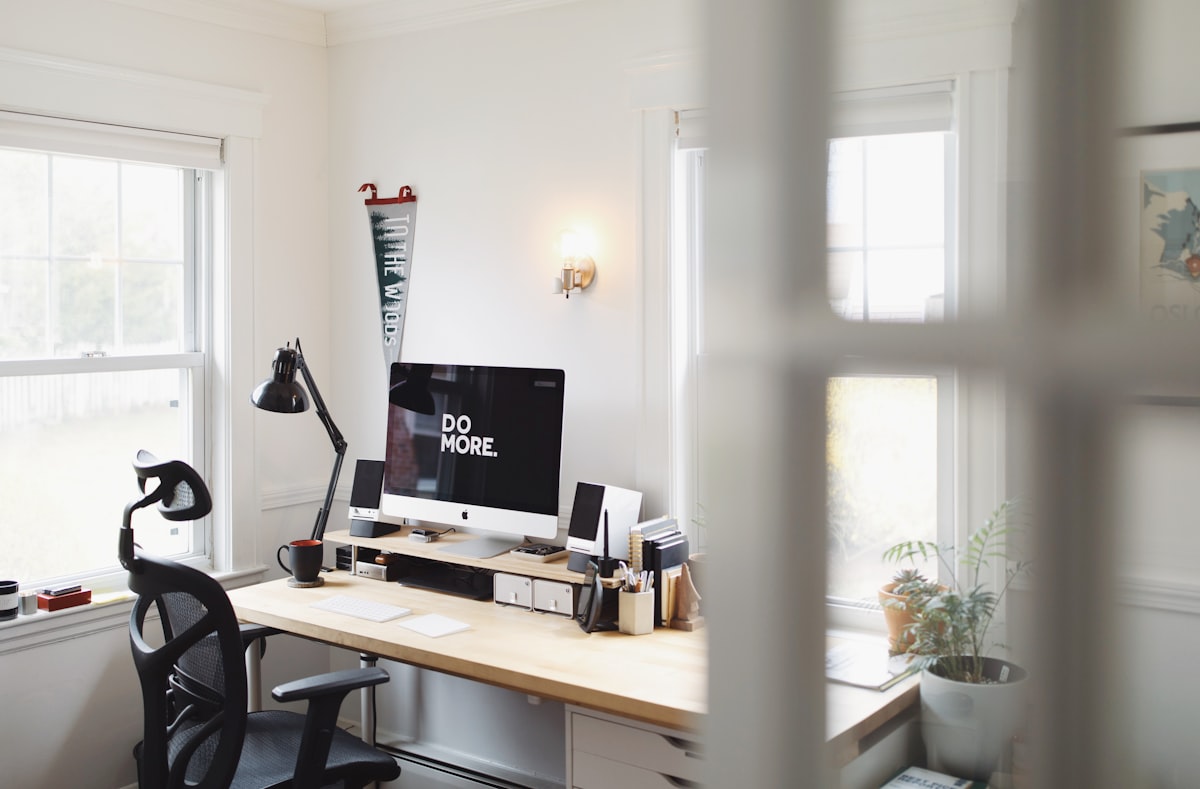
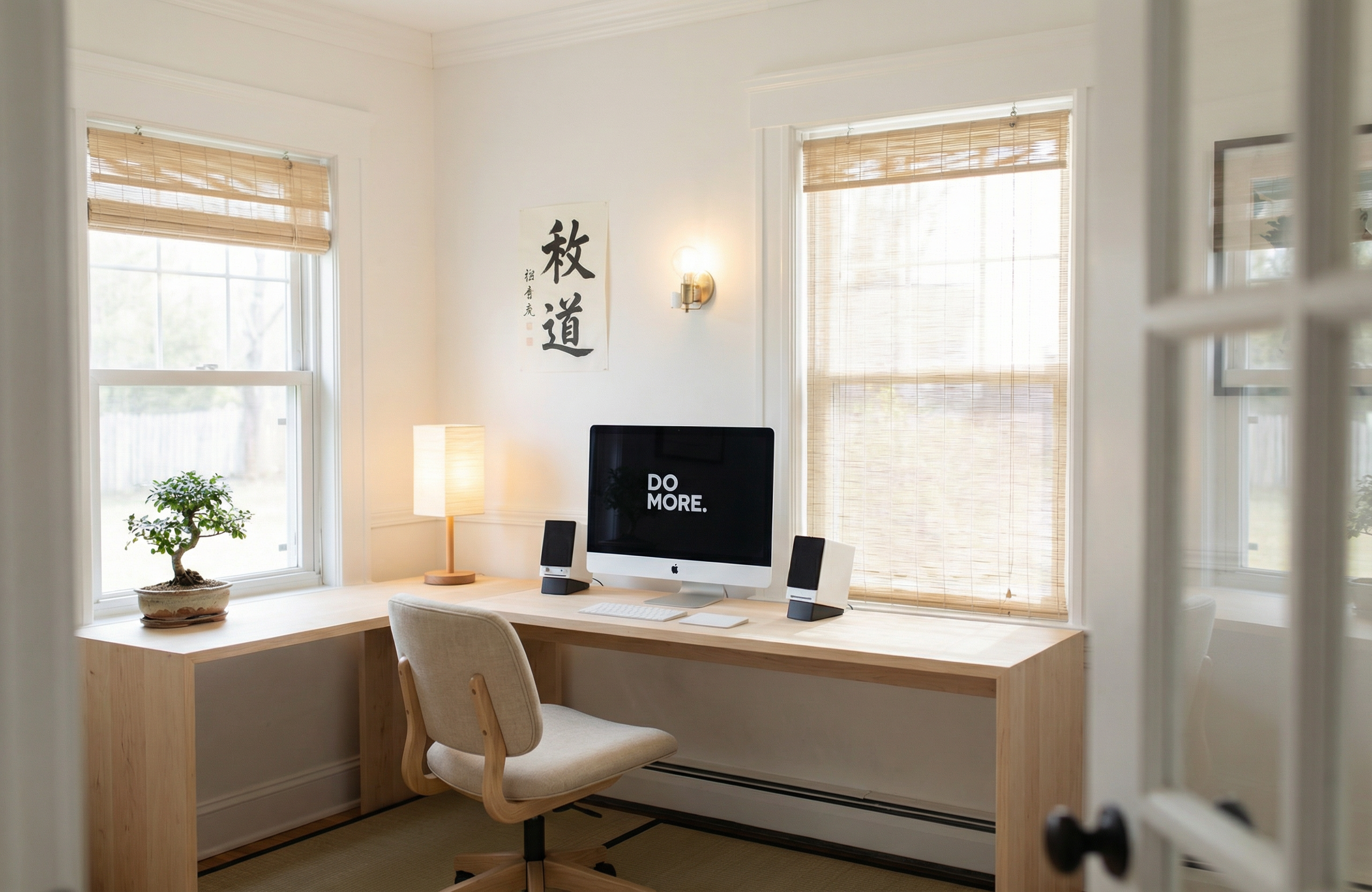
Drag the slider to compare — Photo by Carl Heyerdahl via Unsplash
This is a roughly 10-by-12-foot home office with standard 8-to-9-foot ceilings. It’s a genuinely nice room — light wood desk, iMac setup, two large double-hung windows flooding the space with natural light. White walls with traditional wainscoting and crown molding give it clean architectural bones. There’s a brass wall sconce with an exposed bulb that adds character.
But look closer. A black mesh task chair, black speakers, a black articulating desk lamp, stacked organizers, papers, a mug, small boxes, pens scattered across the surface. A pennant on the wall, plants crowding the window sills, and a few framed pieces that don’t quite connect to a design story. The palette reads as white, light wood, and black — functional but visually restless. It’s a room built for output, not for calm.
What Our AI Noticed
When we ran this photo through RoomSnap’s analysis pipeline, the AI immediately identified the core tension: a room with excellent bones buried under visual noise.
The architectural features got flagged as keepers — both double-hung windows with white frames and roller blinds, the crown molding, baseboards, brass wall sconce, and door frame. These elements give the room its character, and good design preserves them.
The clutter inventory was specific: pennant on the wall, mug and coaster on the desk, small boxes, loose papers, keyboard and mouse (the accessories, not the computer), pens and supplies, plants stacked on window sills, and various small items crowding the left sill. None of these are bad individually. Together, they create a constant low hum of visual distraction.
The lighting assessment was the bright spot — literally. Two large windows provide abundant natural light, which is a massive asset. Workers near windows sleep 46 minutes longer per night compared to those in windowless spaces (K2Space, 2025). This room already has the single most important ingredient for a healthy workspace. The design just needs to get out of its way.
The Design Strategy
The AI’s rationale centered on three Japanese zen principles: Kanso (simplicity), Shizen (natural harmony), and Seijaku (tranquil stillness). Rather than adding to this room, the strategy was almost entirely about subtraction and material replacement.
The black mesh chair, black speakers, and black metal lamp — all that high-contrast task furniture — get replaced with natural materials. Think unfinished wood, linen, bamboo. The desk shifts to a cleaner profile. The wall clutter comes down entirely, replaced by a single piece of calligraphy art and a carefully placed bonsai. The roller blinds swap for bamboo shades that filter light instead of blocking it.
The key concept here is Ma — the Japanese appreciation for emptiness. Clear desk surfaces aren’t lazy; they’re intentional. Every object that stays earns its place.

Not sure if zen is right for your space? Upload your room photo and try different styles — RoomSnap offers 16+ design presets from mid-century modern to japandi. Compare the results side by side in your Gallery before committing to a direction.
And the smart constraint: those windows, the sconce, the molding, and the baseboards all stay put. The AI recognized that the room’s architecture already speaks a quiet, clean language. The furniture just needed to match it.
The Result
The transformation is striking because of how little was added and how much was removed. The iMac stays — it’s a design object in its own right — but everything around it breathes now. The desk surface is nearly bare. Bamboo shades soften the window light instead of competing with it. A single bonsai and a calligraphy scroll replace the scattered wall decor and windowsill plants.
The architectural preservation is seamless. The crown molding, wainscoting, and brass sconce look like they were always meant for this aesthetic — they just needed the surrounding noise cleared away so you could actually see them. The color palette shifted from white-wood-black to warm earth tones with natural textures, and the room immediately feels larger and quieter.
There’s a reason 33% of design professionals emphasize calming, serene environments as a top priority for home offices (Fixr, 2024). And it’s backed by data: workers in environments with natural elements report 15% higher wellbeing and creativity, plus 6% higher productivity (K2Space, 2025). This room didn’t need more stuff. It needed less — and better.
Key Takeaways
- Subtract before you add. The biggest change in this room came from removing clutter, not buying new furniture. Clear your surfaces first, then decide what actually deserves to come back.
- Match your materials to one story. The original room mixed black mesh, black metal, light wood, and white plastic. The zen version commits to natural materials — wood, bamboo, linen — and the cohesion does all the work.
- Protect your natural light. This room’s two large windows are its greatest asset. An 84% reduction in eyestrain and headaches has been linked to optimized natural daylight in workspaces (K2Space, 2025). Don’t block your windows with heavy treatments or stack objects on the sills.
- Let your architecture speak. Crown molding, wainscoting, and that brass sconce were always there. They just couldn’t compete with the visual clutter. Sometimes the best design move is revealing what your room already has.
Sources
- Home Office Trends Survey (Fixr, 2024)
- Office Design Trends 2026 (K2Space, 2025)
See what RoomSnap can do with your space — download free on the App Store
